
Evolution of money from Barter System to Digital Payment Methods
Introduction to the Evolution of Money
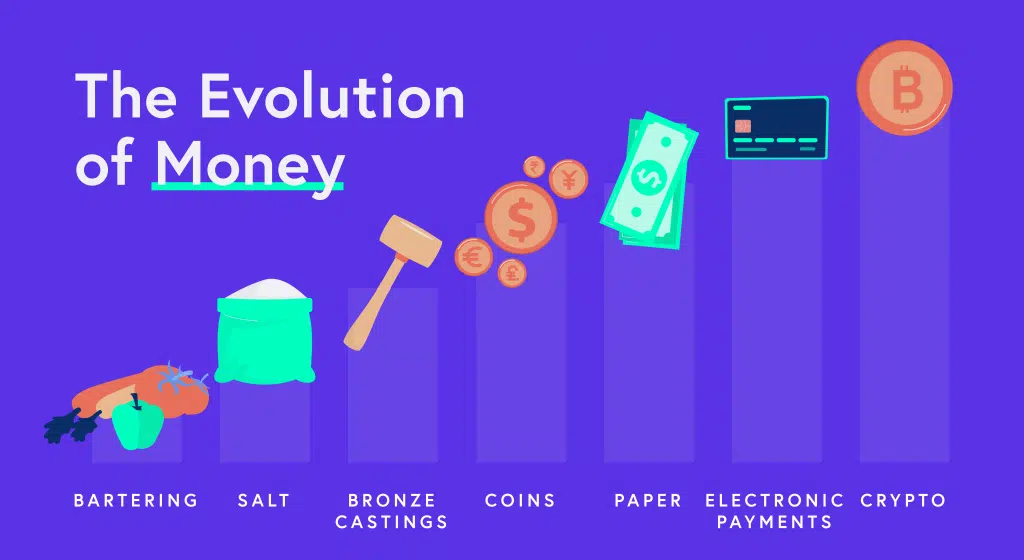
To understand the evolution of money, we must first grasp how societies have exchanged goods and services throughout history. In the beginning, people relied on the barter system where goods and services were directly exchanged for other goods and services. Goods like livestock, grains, and even seashells were used as currency. This system had significant drawbacks, such as the lack of a standard value and difficulty in finding matching wants. Imagine needing to find someone who has exactly what you want and also wants what you have.
As economies grew and became more complex, the inefficiencies of barter gave rise to the need for a more standardized medium of exchange. The earliest forms of money took the shape of precious metals like gold and silver. They were universally accepted and could easily be divided into smaller units. This was a major step forward in solving the problems of barter, setting a new standard for trade.
Over centuries, paper money and coins issued by governments became the norm. These were easier to carry and facilitated larger transactions. However, with the advent of the digital age, the landscape of money is once again transforming. Digital payment methods, including credit cards, digital wallets, and most intriguingly, cryptocurrencies, are becoming a significant part of our daily transactions.
Cryptocurrency, a digital or virtual currency using cryptography for security, introduces a revolutionary concept in the world of finance. From getting started with cryptocurrency to exploring what is crypto bitcoin ethereum, the journey is fascinating. You might wonder why cryptocurrency has gained traction. Its decentralized nature, absence of intermediaries, and potential for financial inclusivity offer compelling reasons.
For those new to this space, understanding top crypto trading tips for beginners and discovering how to get free bitcoin in India legit can be fantastic starting points. The digital currency landscape is complex but offers new forms of financial interactions that were unimaginable just a few decades ago.
Origins of the Barter System
When I dive into the origins of the barter system, I think about our ancestors who existed long before modern concepts like cryptocurrency or detailed top crypto trading tips for beginners. These early humans needed an efficient method to exchange goods and services.
1. Barter in Early Societies
Barter systems were the backbone of early economies. Before money, people directly exchanged goods:
- Agricultural societies: Farmers traded crops for tools or livestock.
- Craftsmen and artisans: Exchanged crafted goods like pottery or weapons for food and raw materials.
- Hunter-gatherer communities: Swapped hunted game for fruits, nuts, or prepared clothing.
2. Barter Across Civilizations
As civilizations advanced, so did their barter systems:
- Mesopotamia (circa 6000 BC): One of the earliest known barter systems thrived here. It was common to trade grains for metals.
- Egyptians: Frequently traded grain, beer, and linen.
- Phoenicians: Their maritime trade led to the exchange of goods such as textiles and spices across the Mediterranean.
3. Limitations of Bartering
Despite its utility, bartering had significant limitations:
- Double coincidence of wants: Each party needed to have something the other wanted.
- Lack of divisibility: Bartering relied on whole items, challenging when needs were for portions not wholes.
- Value estimation: No standardized measure meant the value of traded items fluctuated.
4. Key Barter Items
Certain items became staples of barter systems:
- Salt: Sometimes referred to as "white gold," it was essential for preservation and flavor.
- Grain: A key dietary staple.
- Livestock: Represented wealth and sustenance.
- Crafted tools: Integral for agriculture and daily life.
By understanding the barter system, I can better appreciate the evolution toward monetary systems. It also frames why cryptocurrency innovations like Bitcoin and Ethereum are crucial. Queries like "how to get free Bitcoin in India legit" or "why cryptocurrency" highlight modern approaches to an age-old problem: how to efficiently trade and store value.
The ingenuity required for bartering set the foundation for later monetary advancements, as societies sought solutions to the system's shortcomings. This historical perspective also provides insights into "what is crypto Bitcoin Ethereum" by showing the continuous thread of evolution in trade and commerce practices.
Limitations of the Barter System
When I reflect on the limitations of the barter system, it's clear that this form of exchange had significant drawbacks. Understanding these limitations is essential as it provides context for why we transitioned to modern forms of money, including getting started with cryptocurrency.
- Double Coincidence of Wants: For a barter transaction to work, both parties needed to have exactly what the other wanted. This double coincidence of wants made finding trade partners difficult and time-consuming. Unlike digital currency exchanges, where market demand often matches supply effortlessly, barter exchanges required perfect alignment of needs.
- Lack of Common Measure of Value: In the barter system, there wasn't a common metric to determine the value of goods and services. This ambiguity made transactions complicated. Today, even if I'm curious about how to get free bitcoin in India legit, the value of bitcoin is easily quantifiable in fiat currency, offering clarity.
- Indivisibility of Goods: Certain goods can't be divided without losing value. For example, if I needed to trade a goat for something of a lesser value, it would be impractical to split the goat. Cryptocurrencies, on the other hand, like bitcoin and ethereum, offer divisibility down to minute fractions.
- Lack of Wealth Storage: Barter goods could perish, lose value, or become obsolete. Storing wealth in the form of goods was, therefore, risky and inefficient. Modern digital wallets, supporting crypto assets, negate this risk by providing secure ways to store wealth.
- Transportation Problems: Moving large or bulky barter goods from one place to another was cumbersome and costly. With cryptocurrency, transactions occur digitally, eliminating the need for physical transportation.
- Deferred Payments: Barter made it challenging to make deferred payments or loans because it was difficult to value future goods and ensure their quality. Contrast this with modern methods where I can refer to top crypto trading tips for beginners and leverage various financial tools to make future payments securely and accurately.
- Limited Scope of Trade: Barter restricted the scope of trade to local communities. Without a universally accepted medium, long-distance trade was nearly impossible. Nowadays, global trade is seamless, thanks to digital payment systems and cryptocurrencies that easily cross borders.
In considering these limitations, I see why cryptocurrency has become a revolutionary step forward in finance. If you’ve wondered why cryptocurrency is the buzz today, just consider its sheer ability to overcome the barriers once set by the barter system. What is crypto bitcoin ethereum if not the elegant solutions to these ancient challenges? The progress from bartering to digitally executed crypto transactions marks the vast improvement in the efficiency and effectiveness of trade.
The Emergence of Commodity Money
When transitioning from the barter system, I always find the emergence of commodity money particularly fascinating. This shift was crucial in the evolution of money since people started using objects that had intrinsic value, making transactions smoother and more reliable. Commodities like gold, silver, and even grains were used as standards of trade because they were durable, divisible, and had a wider acceptance. Here are some essential points to understand this era:
Intrinsic Value of Commodities
- Gold and Silver: These metals were the preferred choices, as they were not only valuable but also portable, divisible, and durable. They held intrinsic value due to their inherent qualities and universal desirability.
- Grains and Livestock: In agricultural societies, grains and livestock acted as money because they were essential for sustenance and had intrinsic value. They were more prevalent before the use of metals became widespread.
Standardization of Value
- Uniformity: Commodity money introduced the concept of uniformity in trade, which was absent in the barter system. Unlike a trade where one might swap a cow for some grain, commodity money allowed everyone to agree on standardized values.
- Measured Units: The use of commodities brought about the idea of measured units. For instance, a specific weight of gold or a designated number of grains helped in evaluating the worth of various goods and services.
Benefits Over Barter
- Storage of Value: Commodities could be stored without losing value over time. Gold, for instance, could be kept for years, unlike perishable goods in a barter system.
- Medium of Exchange: Having a universally accepted commodity as a medium of exchange made it easier to perform transactions. No longer did people have to find someone who had what they wanted and simultaneously needed what they had.
Challenges Faced
- Portability: While metals like gold were relatively portable, other commodities, such as grains or livestock, were difficult to carry over long distances.
- Authenticity and Quality: Ensuring the authenticity and quality of commodities was another challenge. Counterfeit or low-quality metals needed to be identified to maintain trust in the system.
The emergence of commodity money was a significant milestone in monetary history. It provided a more reliable and efficient way of conducting transactions compared to the barter system. This era laid the foundation for the development of more sophisticated forms of money.
For those interested in the modern evolution of money, looking into "getting started with cryptocurrency," "how to get free bitcoin in India legit," or exploring "top crypto trading tips for beginners" is highly recommended. Understanding "why cryptocurrency" and "what is crypto bitcoin ethereum" can provide a comprehensive view of how money has transformed over the ages.
Introduction of Metal Coins
I have explored various forms of money, starting with the barter system. However, the introduction of metal coins marked a significant milestone in the evolution of money. Metal coins were an essential advancement because they offered a standardized form of currency that could be universally recognized and valued across different regions.
The Origin of Metal Coins
Metal coins were first introduced around 600 BC by the Lydians in what is now modern-day Turkey. These coins were originally made from electrum, a natural alloy of gold and silver. They quickly spread to other civilizations such as the Greeks, Persians, and Romans due to their ease of use and durability.
Advantages of Metal Coins
Metal coins offered several advantages over previous forms of money:
- Uniformity: Each coin was identical in weight and metal content, providing a consistent measure of value.
- Portability: Unlike cumbersome barter items, metal coins were small, compact, and easy to carry.
- Durability: Made from durable metals like gold, silver, and bronze, these coins could withstand wear and tear over long periods.
- Widely Accepted: Metal coins became widely accepted across different regions, facilitating trade and commerce.
The integration of metal coins into society laid the foundation for more complex economies and trade networks. As societies grew more interconnected, the usage of metal coins became a vital aspect of daily transactions.
Modern Implications
Understanding the historical significance of metal coins can provide valuable insights for anyone interested in getting started with cryptocurrency. Just as metal coins revolutionized trade in the ancient world, digital currencies like Bitcoin, Ethereum, and other cryptocurrencies are transforming the way we think about money today. Questions like "why cryptocurrency?" and "what is crypto bitcoin ethereum?" are just the modern echoes of past inquiries about traditional metal currency.
If you’re curious about how to get free Bitcoin in India legit or looking for top crypto trading tips for beginners, knowing the journey from barter to metal coins can help you appreciate the innovations in digital finance.
The Advent of Paper Money
The transition from metal coins to paper money marked a significant milestone in the evolution of monetary systems. The advent of paper money can be traced back to the Tang Dynasty in China during the 7th century. Before diving deeper, understanding why this transition happened can provide valuable insights.
One of the primary reasons for shifting to paper money was the impracticality of using large amounts of metal coins for extensive trade and transactions. As I got started with cryptocurrency, it reminded me of the same convenience paper money must have brought, much like the ease of digital currencies compared to traditional cash.
Paper money, often referred to as "fiat currency," is backed by the trust in the government that issues it rather than a physical commodity like gold or silver. Here’s why this innovation was crucial:
- Portability: Unlike metal coins, paper money is lighter and easier to carry, making transactions more convenient.
- Large Transactions: It facilitated larger transactions that would be cumbersome with coins.
- Expansion of Trade: Paper money helped expand trade over long distances, as carrying coins was no longer feasible for extensive trading journeys.
- Standardization: It brought about a standardization in value, which helped stabilize economies.
The Sichuan province in China was the first to adopt the exclusive use of paper currency in the 11th century. This system later spread to the rest of China and eventually reached Europe during the 13th century, thanks to explorers like Marco Polo.
As someone interested in top crypto trading tips for beginners, drawing parallels between the historical adoption of paper money and modern digital currencies like Bitcoin and Ethereum is fascinating. The challenges and skepticism paper money faced are not so different from today's discussions around cryptocurrency.
Why cryptocurrency and digital payment systems are gaining prominence today highlights a similar evolution driven by the need for more efficient, secure, and immediate transaction methods. Understanding what is crypto, Bitcoin, and Ethereum can provide modern insights into how economies may once again be transformed by these innovations.
The Development of Banking Systems
When discussing the evolution of money from the barter system to digital payment methods, the development of banking systems is crucial. I find this an interesting transition because it highlights how financial innovation has continually evolved to meet human needs.
Initially, in agrarian societies, people stored their surplus produce or precious items like gold with trusted individuals or temples. These entities provided safety for valuables in exchange for a small fee, laying the foundation for what we now recognize as banking.
As trade expanded, so did the complexity of financial transactions. Merchants needed secure and efficient ways to conduct business across regions. This need led to the establishment of early forms of banks in ancient civilizations like Babylon, Greece, and Rome. These early institutions provided services such as currency exchange, loans, and deposit safekeeping.
Medieval Europe saw further advancements with the emergence of banking families like the Medicis in Italy. They revolutionized banking by introducing double-entry bookkeeping, enhancing financial accountability and transparency. This period also saw the birth of banknotes, an innovation that simplified large transactions.
The Industrial Revolution dramatically transformed banking once more. With the proliferation of factories and global trade, banks began to offer more sophisticated services:
- Commercial Loans: Facilitated business expansion.
- Savings Accounts: Encouraged personal financial growth.
- Stock Markets: Provided a platform for raising and investing capital.
Fast forward to the 21st century, and digital technology has radically altered banking. The rise of internet banking has made financial services more accessible than ever. Mobile apps, online banking, and contactless payments offer unprecedented convenience.
The integration of cryptocurrency represents the latest phase in this development. I often wonder, "What is crypto bitcoin ethereum?" and "Why cryptocurrency?" These digital currencies and technologies like blockchain are transforming how we perceive money. For getting started with cryptocurrency, knowing top crypto trading tips for beginners is crucial. Many even seek ways to figure out how to get free bitcoin in India legit.
In summary, banking systems have evolved from simple safekeeping to complex digital networks. They now connect billions globally, influencing how we save, invest, and transact on unprecedented scales. It's a remarkable journey that underscores human ingenuity in solving financial challenges over millennia.
The Transition to Electronic Money
The shift from traditional physical currencies to electronic money has reshaped the way we transact and perceive value. This transformation started long before the advent of cryptocurrencies, but it set the stage for digital currencies' prominence today.
Early Beginnings
Initially, electronic money was represented by credit and debit cards. The convenience of plastic money made it an immediate hit. I remember how exciting it was to no longer need to carry cash, just a card that could handle multiple financial transactions efficiently.
Rise of Online Banking
The introduction of online banking further pushed the boundaries of electronic money. You could now transfer money, pay bills, and manage your finances from the comfort of your home. The transition from standing in long bank queues to a few clicks on a computer was revolutionizing. I often wondered about the security aspects, but the institutions quickly enhanced their online security measures.
Digital Wallets
Digital wallets then became the next significant step. Platforms like PayPal, Venmo, and Google Pay allowed for even more streamlined transactions. With just a smartphone, buying goods and services became quick and simple. I appreciated how seamless it felt to make a purchase, transferring money within seconds.
Cryptocurrencies
Cryptocurrencies represent the latest and possibly most groundbreaking phase in electronic money evolution. Understanding what crypto bitcoin ethereum entails opens up a world of decentralized finance. I found myself diving deep into topics like getting started with cryptocurrency, why cryptocurrency is gaining traction, and even how to get free bitcoin in India legit. Learning top crypto trading tips for beginners was crucial for navigating this new terrain.
* Decentralized Nature: Unlike traditional currencies, cryptocurrencies are not governed by any central authority.
* Security and Privacy: Cryptocurrencies employ blockchain technology, which ensures transparency and security.
* Global Transactions: With crypto, sending money across borders has never been easier, faster, and cheaper.
Current Trends
Crypto wallets and exchanges are now household names. Platforms like Coinbase, Binance, and others facilitate the buying, selling, and storage of digital currencies. As someone vested in technology, I find these tools invaluable. The widespread acceptance of cryptocurrencies and continuous innovations keep this space dynamic and full of potential.
The Rise of Digital Payment Methods
Digital payment methods are revolutionizing how we handle money. I've witnessed a dramatic shift from physical cash to virtual transactions. With the advent of the internet and smartphones, making payments has become more convenient and secure.
Key Components
There are several key components driving the rise of digital payments:
- Mobile Wallets: Apps like Apple Pay, Google Wallet, and Samsung Pay have made it incredibly easy to pay for goods and services through smartphones.
- Cryptocurrencies: The rise of cryptocurrencies such as Bitcoin, Ethereum, and other altcoins are changing the financial landscape. If you're getting started with cryptocurrency, understanding what is crypto bitcoin ethereum is crucial.
- Contactless Payments: Technologies like Near Field Communication (NFC) allow for quick and safe transactions simply by tapping a card or device.
Advantages
Why should you consider digital payments over traditional methods? Here are some compelling reasons:
- Convenience: No need to carry cash; everything you need is in your phone or card.
- Speed: Transactions happen instantly, saving you time.
- Security: Enhanced encryption and two-factor authentication reduce the risk of fraud.
Cryptocurrencies and Their Impact
One aspect of digital payments that has caught my attention is cryptocurrencies. If you're wondering why cryptocurrency is gaining popularity, it’s mainly due to its decentralized nature and potential for high returns.
Getting started with cryptocurrency can be daunting. Knowing some top crypto trading tips for beginners can help ease the process. Additionally, for those looking into how to get free bitcoin in India legit ways are available, like participating in airdrops or using earning platforms.
Future Trends
The future of digital payments looks promising, with several trends emerging:
- Increased Use of QR Codes: Quick Response (QR) codes are becoming a popular method for secure payments.
- Blockchain Technology: Beyond cryptocurrencies, blockchain is being used to enhance transparency and security in transactions.
- Financial Inclusion: Digital payments provide unbanked populations access to financial services.
The rise of digital payment methods is not just a trend but a significant evolution in how we interact with money. Understanding these components and their impacts will prepare you for the future of financial transactions.
Advantages of Digital Payments
When I think about the advantages of digital payments, several important aspects come to mind, especially for the curious cryptocurrency enthusiasts seeking answers on getting started with cryptocurrency. Here are some reasons why digital payments are beneficial:
Convenience and Accessibility
- 24/7 Availability: Unlike traditional banking hours, digital payment systems are available around the clock, making it easier for me to manage finances whenever I need.
- Instant Transactions: Digital payments eliminate the waiting period associated with bank transfers and checks, allowing for instantaneous transfer of funds.
- Global Reach: With digital payment platforms, I can send and receive money from anywhere in the world.
Security
- Encrypted Transactions: Digital payments often come with advanced encryption technologies that protect my financial information from unauthorized access.
- Fraud Detection: Many platforms incorporate real-time fraud detection systems to alert me of any suspicious activities on my accounts.
- Two-Factor Authentication (2FA): Using 2FA, I get an added layer of security, ensuring that only I can access my account and approve transactions.
Cost-Efficiency
- Lower Transaction Fees: Compared to traditional banks, digital payment services usually have lower fees, especially beneficial for someone like me who frequently transfers small and large sums of money.
- Reduced Overhead Costs: Without the need for physical branches, digital payment providers often pass on the savings to users in the form of lower service fees.
Transparency and Tracking
- Transaction History: Digital payments provide a detailed history of all transactions, helping me keep track of my spending and manage my budget effectively.
- E-Receipts: I receive electronic receipts immediately after every transaction, making it easier to maintain records for financial planning and audits.
Incentives and Rewards
- Cashback Offers: Many digital payment platforms offer cashback and reward points for every transaction, motivating me to use these services regularly.
- Promotional Deals: Payment services frequently have special promotions and discounts, helping me save money on purchases.
Integration with Emerging Technologies
- Cryptocurrency: Digital payment platforms are increasingly integrating with cryptocurrencies. Knowing how to get free bitcoin in India legit can be a significant advantage as I explore why cryptocurrency can be a transformative financial tool.
- Blockchain Technology: The decentralized nature of blockchain in platforms like crypto bitcoin ethereum ensures that transactions are secure, transparent, and immutable.
Enhanced User Experience
- User-Friendly Interfaces: Modern payment apps are designed with intuitive interfaces, making it easy for even beginners to navigate.
- Top Crypto Trading Tips for Beginners: Many digital platforms provide educational resources, from tutorials and tips to best practices, aiding my journey through the digital financial ecosystem.
Challenges and Security Concerns
Getting started with cryptocurrency has revolutionized the way we perceive money, but it also introduces new challenges and security concerns. When I first delved into understanding what is crypto bitcoin ethereum, I realized the potential risks that come with digital payment methods.
Top crypto trading tips for beginners emphasize the importance of security. Here are some common challenges and security issues:
- Cybersecurity Threats:
- Hackers often target digital wallets and exchanges.
- Phishing attacks trick users into divulging their private keys.
- Volatility:
- Cryptocurrencies are highly volatile, causing rapid changes in value.
- This volatility can lead to significant financial loss.
- Regulatory Uncertainty:
- Governments worldwide are still figuring out how to regulate cryptocurrencies.
- Changes in regulation can impact the value and legality of currencies.
- Scams and Fraud:
- Ponzi schemes and fraudulent ICOs (Initial Coin Offerings) are prevalent.
- Knowing how to get free bitcoin in India legit requires identifying genuine offers amidst scams.
- Technical Issues:
- Digital platforms may suffer from technical glitches or downtime.
- Users might lose access to their funds due to technical mishaps.
- User Error:
- Misplacing private keys can result in permanent loss of access to funds.
- Inadequate understanding can lead to costly mistakes in transactions.
Why cryptocurrency, despite these issues, remains popular is due to the potential benefits like privacy, decentralized control, and substantial gains. However, I must weigh these benefits against the inherent risks.
To mitigate these challenges:
- Use hardware wallets for storing cryptocurrency.
- Enable two-factor authentication on exchanges.
- Stay informed about cybersecurity practices.
Understanding these aspects better prepares me for the dynamic field of digital payment methods and heightens awareness of maintaining security in cryptocurrency transactions.
 Future Trends in Money and Payments

As I navigate the ever-evolving landscape of money and payments, it's clear that the future holds both exciting opportunities and challenges. Understanding future trends such as [getting started with cryptocurrency](https://computergeekofficial.blogspot.com/2024/11/getting-started-with-cryptocurrency.html), how to get free bitcoin in India legit, and top crypto trading tips for beginners is pivotal. But why cryptocurrency? And what is crypto, bitcoin, and ethereum? Let's dive into it.
 Cryptocurrencies Continue to Soar
Cryptocurrencies, especially bitcoin and ethereum, are becoming more mainstream. As more individuals and institutions adopt these digital assets, their value and legitimacy rise exponentially.

Central Bank Digital Currencies (CBDCs)
Many central banks are exploring or pilot-testing digital currencies as they aim to maintain control over monetary policy and financial stability. Unlike cryptocurrencies, CBDCs are centralized and regulated by governments, bringing a different dynamic to the digital currency space.

Increased Adoption of Blockchain Technology
Blockchain technology, the backbone of cryptocurrencies, is set to revolutionize more than just payments. From supply chain management to secure voting systems, its decentralized, transparent nature will continue to disrupt various industries.
Enhanced Security Measures
With the rise in digital payment methods comes the need for more robust security protocols. Future trends indicate a move toward biometrics, such as fingerprint and facial recognition, and advanced encryption techniques to safeguard digital transactions.

The Role of Artificial Intelligence (AI) and Machine Learning (ML)
AI and ML algorithms will play a crucial role in predictive banking, fraud detection, and personalized financial services. These technologies will make financial transactions smoother and more secure while offering personalized financial advice.

Mobile Payment Solutions
Mobile wallets and payment apps like Apple Pay, Google Wallet, and other regional solutions will grow in popularity. Their convenience, along with features like peer-to-peer payments and integration with other financial services, make them appealing.

Sustainable and Ethical Practices
Consumers and businesses are increasingly demanding sustainable and ethical practices. Future trends will likely see a rise in green finance solutions that focus on environmental, social, and governance (ESG) criteria.

Financial Inclusion
Efforts to bridge the financial inclusion gap will gain momentum, driven by mobile banking and micro-finance solutions. This will empower millions of unbanked individuals globally, providing them access to financial services.

The Metaverse and Virtual Economies
The advent of the Metaverse brings new opportunities for virtual economies. Transactions in this space will likely be dominated by digital currencies, NFTs (Non-Fungible Tokens), and smart contracts.

Regulatory Developments
As digital currencies and payment technologies evolve, regulations will also adapt. Future trends point towards a global framework for cryptocurrency regulations to prevent misuse and promote fair practices.

These trends represent only a glimpse into the future of money and payments. Staying informed and adapting to these changes will be key to leveraging the benefits they bring.
Conclusion: The Journey from Barter to Digital
The evolution of money from the barter system to digital payment methods is a remarkable journey demonstrating how human ingenuity has shaped our economic interactions. Starting from trading goods directly, the limitations of barter systems led to the creation of a standardized form of currency. This shift allowed for easier valuation and exchange of goods and services.
Key Stages in Monetary Evolution
- Barter System: Initially, people exchanged goods and services directly. This was inefficient due to the need for a coincidence of wants, lack of standardization, and difficulties in storing wealth.
- Commodity Money: Items like salt, cattle, and precious metals became standardized commodities that held intrinsic value, simplifying trade.
- Coined Money: The introduction of metal coins, stamped for authenticity, provided a durable and easily transportable form of currency.
- Paper Money: Paper currency, backed by national treasuries, allowed for the convenient transport and storage of wealth without the need for heavy coins.
- Banking Systems: The development of banking systems enabled people to deposit money and use checks as a means of transferring wealth.
- Digital Payment Methods: The advent of the internet and technological advancements led to various digital payment methods.
The Digital Financial Era
With the rise of digital currencies like cryptocurrency, the financial landscape has again radically transformed. Cryptocurrencies offer several potential benefits, such as decentralization, lower transaction costs, and increased security.
- Getting started with cryptocurrency involves understanding what is crypto, Bitcoin, and Ethereum, and why their decentralized nature appeals to users.
- Many people research how to get free Bitcoin in India legally, exploring a variety of legitimate methods and platforms.
- Top crypto trading tips for beginners can be crucial for those new to the market, emphasizing the importance of research and caution.
- Why cryptocurrency is a frequently asked question, with answers often highlighting privacy, security, and financial independence.
The shift from physical money to digital forms has redefined our economic systems, emphasizing convenience, speed, and global accessibility.


.png)

.jpg)
0 Comments